
Can You Skateboard on the Sidewalk?
This post contains affiliate links. As an Amazon Associate, we earn from qualifying purchases.
Can you skateboard on the sidewalk? The answer depends entirely on your city and state. Virginia state law permits skateboarding on sidewalks, but it also allows local governments to ban it on particular sidewalks. In Portland, it’s banned on sidewalks in the downtown core, and separately banned on specific streets like SW Fairview Blvd between 10:00 p.m. And 7:00 a.m. While local ordinances often decide where you can ride, what gear you need, and what the fines are, the FHWA model report recommends states should permit skateboard use on both streets and sidewalks, subject to safety rules.
That local control creates a patchwork of rules for the can you skateboard on the sidewalk question. A federal model recommends allowing it, but your local government may have enacted prohibitions.
What follows: how to decode your own local laws, the safety rules that apply everywhere, and the practical choices between sidewalk and street skating that keep you rolling without a ticket.
Key Takeaways
- Check your city’s municipal code online, state laws often grant local governments the power to set their own skateboarding laws.
- Always yield to pedestrians and give an audible signal before passing, as required by codes like Virginia’s § 46.2-904.
- Riding on a sidewalk in downtown Portland carries a minimum $115 fine, and skateboarding on specific streets like SW Fairview Blvd between 10 p.m. And 7 a.m. Also carries that minimum penalty., time and place restrictions are common.
- The CPSC says some of the most common and severe skateboarding accidents involve collisions with moving vehicles.; stay clear of moving traffic whenever possible.
- Electric skateboards may face different rules; some ordinances, like Portland’s, only govern devices “powered exclusively by human power.”
The Legal Patchwork: State vs. City Rules
You can’t skate by state law alone. Most states grant cities and towns the authority to make their own rules. The Virginia skateboard sidewalk law is a perfect example: it says skateboarding on sidewalks is allowed, but it also explicitly lets local governments prohibit it on specific sidewalks or crosswalks. They just have to post signs.
Common mistake: Assuming what’s true in one city is true in the next. A rule in Los Angeles doesn’t apply in Santa Monica, even though they’re neighbors.
On the other hand, the FHWA model state regulations push for uniform, state-level permission. The federal report recommends that states should permit skateboards on both streets and sidewalks, subject to basic safety rules. It calls the current system “murky” and contradictory.
So you have a tug-of-war: a model for consistency versus the real-world practice of local control. Your local council has the final say.
How Local Laws Break Down
When a city decides to regulate skateboarding, the rules usually focus on three things: place, time, and equipment.
The Portland skateboard ordinance is one of the most detailed. Its rules create clear no-go zones and times.
| Rule Type | Example from Portland Code | Typical Penalty |
|---|---|---|
| Place Ban | No skating on sidewalks in the downtown core bounded by SW Jefferson, Naito Pkwy, NW Hoyt, and 13th Ave. | Minimum $115 fine |
| Time Ban | No skating on SW Fairview Blvd between 10:00 p.m. And 7:00 a.m. | Minimum $115 fine |
| Equipment Mandate | White front light visible from 500 ft and red rear reflector/light visible from 600 ft required at night. | Minimum $115 fine |
| Age-Specific Rule | All persons under 16 must wear a helmet on any street, sidewalk, or bridge. | Maximum $25 fine |
The takeaway? Laws aren’t just about “yes” or “no.” They specify exactly where, when, and how you can ride. Miss one detail, and you’re facing a fine.
How to Find Your Local Skateboarding Laws
Don’t guess. The information is public, but you have to know where to look. The process is straightforward once you know the steps.
First, search for “[Your City Name] municipal code” or “[Your City Name] ordinances.” Every city maintains its laws online. Once you find the site, use the search bar. Try terms like “skateboard,” “roller skates,” or “personal transportation devices.”
If that turns up nothing, check the transportation or parks and recreation sections of the code. Sometimes skateboarding rules are tucked under “Use of Streets and Sidewalks” or “Public Safety.”
I spent an afternoon convinced skating was illegal everywhere in my town. I’d searched for “skateboard ban.” Turns out the rule was listed under “Play Vehicles” in the parks chapter. The wording matters.
When you find the relevant section, read it carefully. Look for:
- Definitions (what counts as a skateboard?).
- Location prohibitions (specific streets, parks, business districts).
- Time restrictions (like Portland’s 10 p.m. Curfew).
- Equipment requirements (lights, helmets).
- Right-of-way rules (yielding to pedestrians).
- Penalties for violation.
If the code is dense, look for summaries or FAQs on your city’s official website. Some parks and recreation departments post simpler guides for skateboard transportation in public spaces.
The Sidewalk vs. Street Debate
Where should you actually skate? The law might give you options, but the pavement decides what’s practical. This choice depends directly on the pavement under your wheels.
Sidewalks offer separation from cars. That’s the big win. The CPSC skateboarding safety fact sheet is blunt: collisions with moving vehicles cause some of the most common and severe accidents. A sidewalk puts a curb between you and that risk.
But sidewalks come with their own hazards. Pedestrians are the main one. You have to yield, always. Virginia law and common sense agree on that. You also need to give an audible signal before passing. A simple “on your left” works.
The ground itself is the other challenge. Sidewalks are famous for cracks, bumps, and debris. A pebble that’s nothing to a bike tire can stop a skateboard wheel dead. Learning to ride over cracks and avoid pebbles is a core skill for any sidewalk commuter.
Streets and bike lanes promise smoother pavement. The ride is often faster and less jarring. But you’re sharing space with cars and bicycles. This demands a higher level of awareness and a commitment to riding predictably. You have to follow traffic rules, signal your turns, and be hyper-visible.
Where this goes sideways: Choosing the street for smoothness but riding against traffic. Cars aren’t looking for you there. You risk a close call.
So which is it? For short trips in quiet neighborhoods, the sidewalk is often the safer, legal choice if you master the pedestrian etiquette. For longer commutes or in areas with heavy foot traffic, the street or bike lane, ridden with the caution you’d use when skate in traffic, might be the better path. Your local laws will tell you which is legally permitted; your eyes and judgment will tell you which is practically wise.
Safety and Etiquette: The Rules That Apply Everywhere
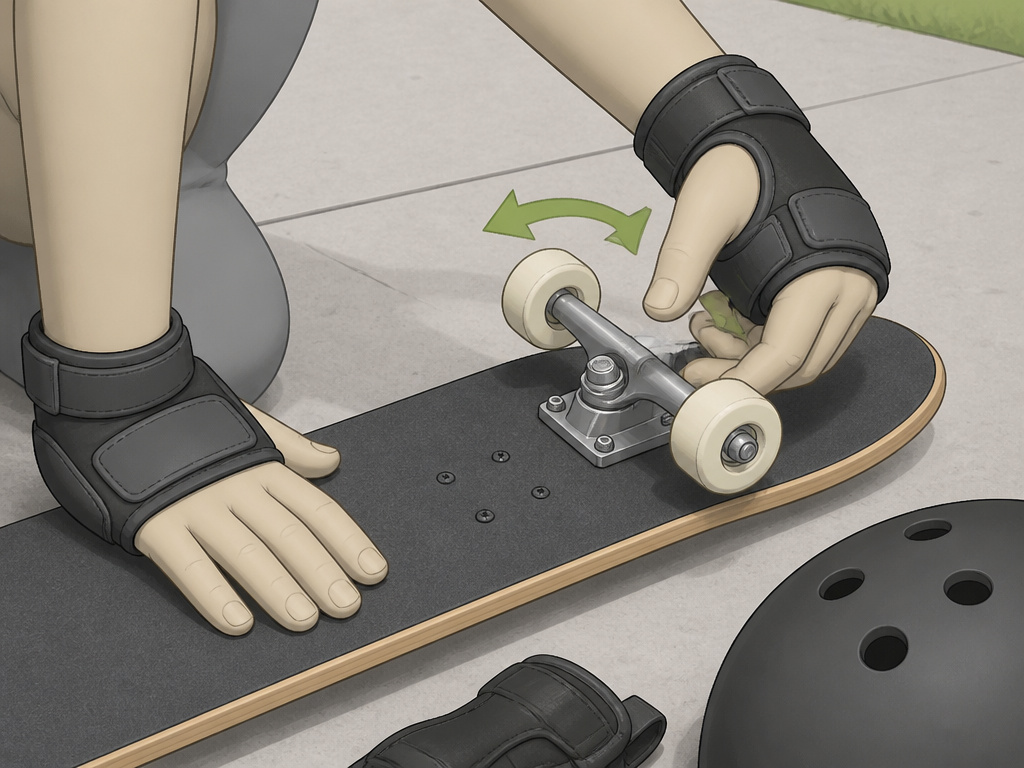
Some rules come from the CPSC skateboarding safety fact sheet and from the basic courtesy that keeps shared spaces working. These are your non-negotiables, regardless of local ordinances.
Gear is not optional. The CPSC’s first tip is to wear protective gear, “especially a helmet.” A helmet should fit snugly, sit level on your head, and be designed for skateboarding, that means a hard shell with a foam interior. Wrist guards are also highlighted as “especially important.” This advice is the documented difference between a scraped palm and a broken wrist.
Your board needs a pre-ride check. Before you push off, check for loose trucks, cracked parts, and worn wheels. The CPSC advises to inspect and adjust your board before you ride, checking for excessive play and any broken or cracked parts. A wobbly kingpin or a flat-spotted wheel changes how your board handles a crack or a turn.
Ride for the conditions. This means three things:
- Visibility: Ride during the day. If you must ride at night, you need lights. Portland’s code specifies a white light visible from 500 feet in front and a red reflector visible from 600 feet in the rear. That’s not just a law; it’s what it takes to be seen.
- Terrain: Inspect your path. Look for holes, wet leaves, or gravel before you commit.
- Speed: Don’t ride faster than you can control. Speed wobble isn’t a myth; it’s physics. The CPSC notes that longer boards and wider wheelbases increase stability at higher speeds.
Share the space. This is the core of sidewalk etiquette. Pedestrians have the right of way. Full stop. If the sidewalk is crowded, get off and walk. Your right to ride doesn’t trump someone’s right to a pleasant, safe walk. In the street, ride predictably, signal your intentions, and don’t weave in and out of parked cars.
Electric Skateboards and Other Edge Cases
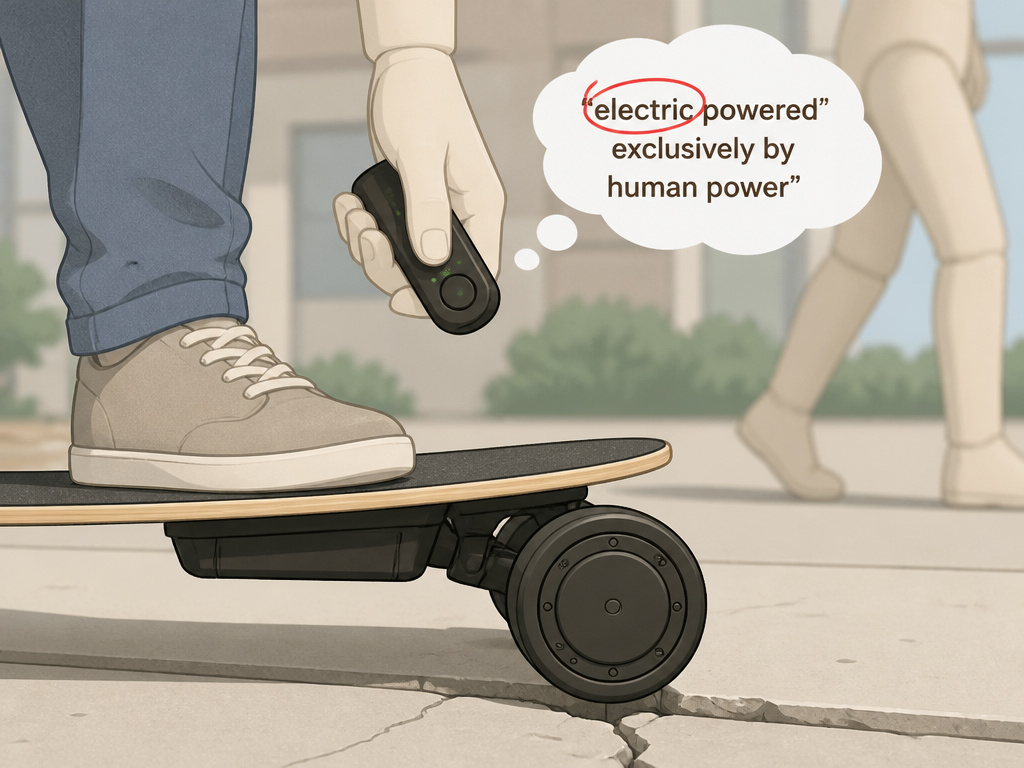
The law often lags behind the gear. Traditional skateboards are one thing, but what about an electric skateboard or a longboard used for commuting?
The legal distinction usually hinges on power source. Notice how the Portland skateboard ordinance repeatedly specifies devices “powered exclusively by human power.” That wording creates a loophole: its downtown ban and time restrictions might not apply to electric boards. You must read your local code with that in mind.
Other states make the distinction explicit. Michigan’s Public Act 204 of 2018 regulates “electric skateboards” separately, requiring an audible signal before passing pedestrians on a sidewalk. Meanwhile, a Reddit thread from r/NYCbike noted that under New York State law, electric skateboards aren’t legal at all, as legal devices must have handlebars.
The lesson? Your board’s specs change its legal status. Assumptions are dangerous. If you ride an electric board, your research needs to be twice as thorough. Look for terms like “electric,” “motorized,” “power-assisted,” or “personal transportation device” in the code.
Longboards and cruisers used for skateboard transportation face a different issue: they’re often used on streets for commuting. While they’re still skateboards in the eyes of the law, their use case, riding in bike lanes or on slower streets, means you must be doubly aware of traffic laws and sharing roads safely.
What to Do If You’re Stopped by Police
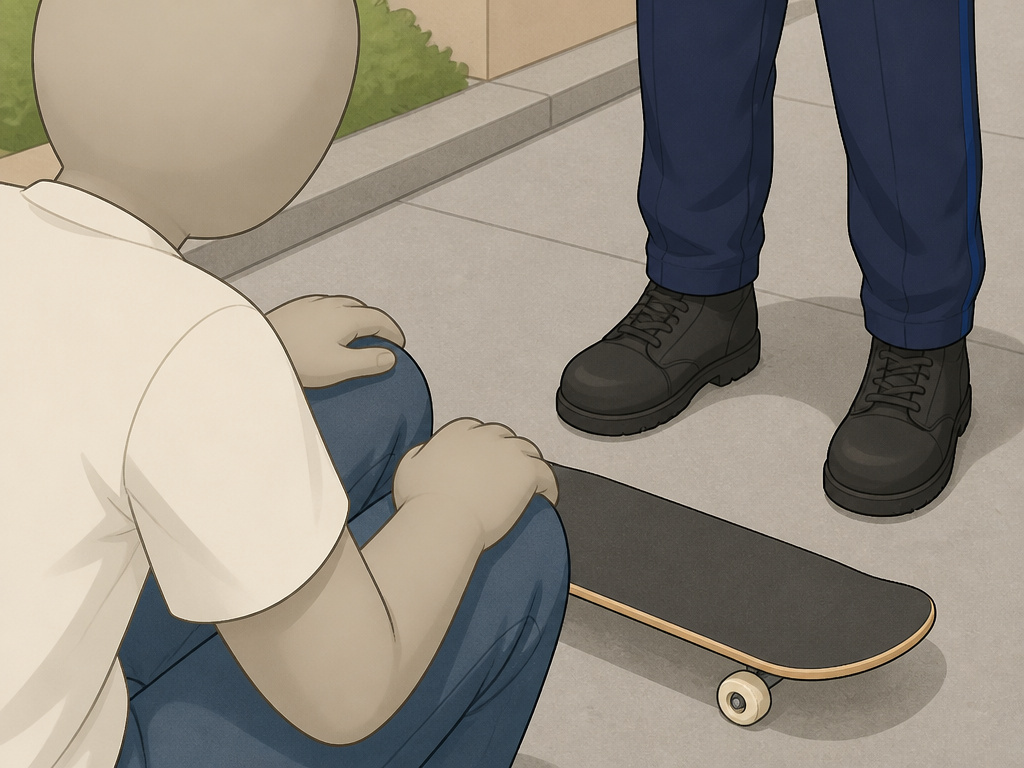
It happens. Even if you’re trying to follow the rules, a police officer might stop you. How you handle the next two minutes matters.
First, stop. Be polite and listen. The officer will likely explain why they stopped you, maybe you’re in a no-skate zone or riding without a light after dark.
Don’t argue on the spot. You can say, “I understand, officer. I was trying to follow the rules. Can you tell me exactly what I did wrong so I don’t do it again?” This shows you’re cooperative, not confrontational.
If you receive a citation, take it. Arguing won’t help and could escalate the situation. Note the details: the exact ordinance you violated, the officer’s name or badge number, and the location. Some cities, like Portland, offer first-time offenders an alternative to a fine, such as a “Share the Road” education program. Ask the officer or check the citation paperwork for options.
Afterward, look up the cited ordinance yourself. Verify it. If you believe the citation was a mistake, you can contest it in court, but you’ll need evidence and a clear understanding of the law. More often than not, the ticket is a costly reminder to double-check your local skateboarding ordinances before you roll out.
Are there time-of-day restrictions for skateboarding?
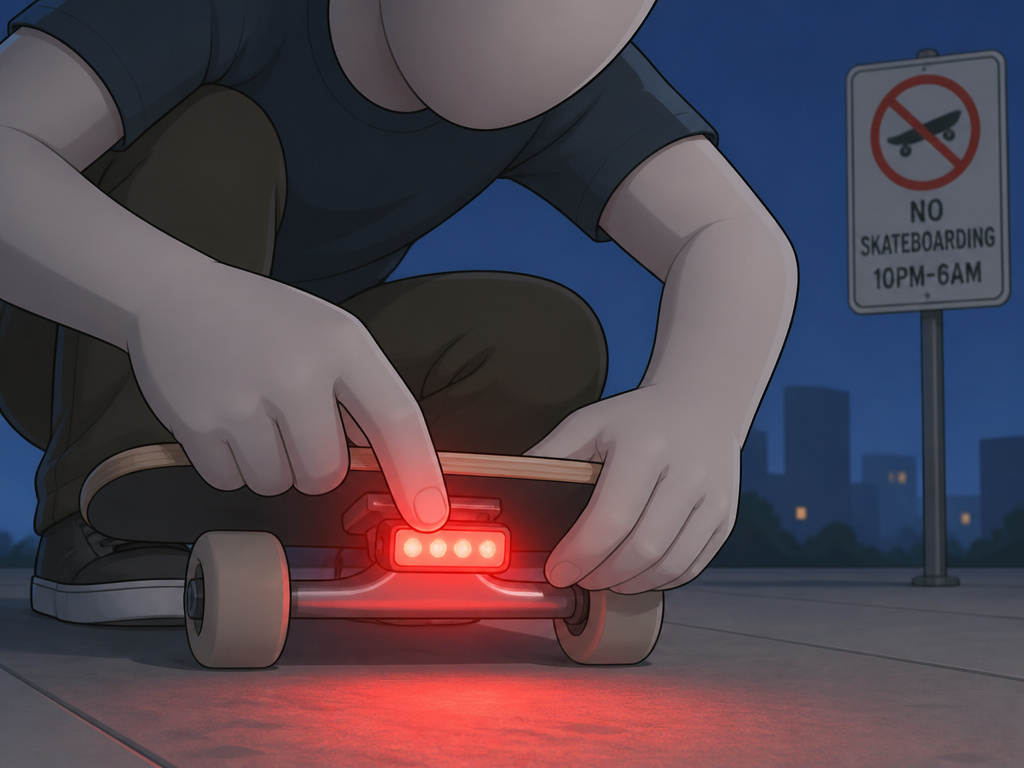
Some cities enforce specific hours when skateboarding is not allowed. For example, in Portland, skateboarding is prohibited on certain streets during nighttime hours, typically from late evening until early morning. This is a local rule, not a statewide one. To know if your city has similar restrictions, you must check its local ordinances. General safety guidance also recommends riding during the day to ensure good visibility, avoiding dusk and dawn when light is low. If you must ride when it’s dark, using proper lighting is crucial for being seen by others.
Frequently Asked Questions
Is it illegal to skateboard on the sidewalk in California?
It depends on the city. California state law doesn’t ban it, but cities like Santa Monica and Burbank have local ordinances that do. In Los Angeles, it is generally permitted on sidewalks, but pedestrians have the right-of-way, and you can be ticketed for endangering them.
Can police take your skateboard?
Generally, no, not permanently for a simple ordinance violation. They can issue a citation. However, if your skateboarding is tied to other illegal activity or you repeatedly violate ordinances, it could be confiscated as evidence or under local nuisance laws. Always check your specific local statutes.
Do I need a helmet to skateboard on the sidewalk?
Local rules apply; for example, Portland requires all skaters under 16 to wear a helmet. However, Portland requires all skaters under 16 to wear a helmet on any street, sidewalk, or bridge. The CPSC strongly recommends everyone wear one regardless of the law, as it’s the single most effective piece of safety gear.
Is it better to skate in the street or on the sidewalk?
It’s a trade-off. Sidewalks separate you from cars but put you near pedestrians and uneven surfaces. Streets offer smoother pavement but require you to skateboard safely near cars. Your decision should be based on local legality, current traffic and pedestrian density, and the quality of the skateboard surfaces.
Before You Go
The question “can you skateboard on the sidewalk?” never has a simple yes or no. It always ends with “check your local laws.” That’s the one action step that applies to every skater, in every city.
Spend time looking up your municipal code. Find the section on skateboards. Know the places where skateboarding is prohibited, the times you can’t ride, and the gear you must carry. Print it out or save it on your phone.
That knowledge turns a murky risk into a clear rule. It’s the difference between guessing and knowing, between a fine and a clean session. Roll with the rules, not against them.
