
How to Overcome Fear of Dropping in: Step-by-Step Guide
This post contains affiliate links. As an Amazon Associate, we earn from qualifying purchases.
To overcome fear of dropping in, you need a clear, step-by-step progression that builds muscle memory on flat ground before you ever approach a ramp, paired with mental techniques to manage the moment of commitment. The fear is natural, but it’s a skill you can break down and learn.
The whole trick lives in a specific physical sequence: your back foot on the tail, your front foot over the front bolts, and a forward weight shift that feels like leaning into a fall. Get that sequence wrong, and the board shoots out; get it right, and you’re rolling. This guide walks through that sequence in detail, then adds the mental drills that get you to actually do it, which is the core of how to overcome fear of dropping in.
What follows: the exact foot placement most guides skip, a dedicated practice for falling safely, breathing exercises to use at the coping, and a clear ladder for moving from curbs to quarter pipes.
Key Takeaways
- Practice the stomping motion on flat ground until shifting your weight forward feels automatic before you ever stand on a ramp.
- Commit fully or don’t try, hesitation causes you to lean back, which guarantees a hard fall onto your tailbone or wrists.
- Wear full protective gear (helmet, knee pads, elbow pads, wrist guards) to turn a fall that could cause injury into a simple roll.
- Start your progression on the smallest possible incline, even if it’s just a painted curb with a slight transition, to learn the feeling without height.
- Use a three-second countdown at the coping; if you haven’t dropped in by three, step off and reset to avoid psyching yourself out.
The Physical Checklist: Stance, Foot Placement, and Weight Transfer
Most guides tell you to “stomp” or “lean forward.” That’s correct, but useless if you don’t know where your feet are. The sequence is everything.
Your back foot goes on the tail, with the ball of your foot near the edge for control. Your front foot should be over the front bolts, not hanging off the side. You’re not just standing there; you’re coiled.
The act of dropping in is a controlled fall. You initiate it by driving your front shoulder down the transition and shifting your center of mass forward, over the front truck. The board will pivot around the rear wheels for a split second before the tail makes contact and you accelerate.
Now, the weight transfer. This is the essential part. You must commit your weight forward, onto your front foot. A beginner’s instinct is to lean back, which feels safer but makes the board shoot out from under you. The forward shift feels like you’re falling face-first into the ramp. That’s the feeling you’re after.
I learned this by watching a student freeze. She stood at the top of a two-foot mini-ramp for nearly ten minutes, board perched on the coping, unable to move. When she finally went, it was on a deep breath and a sudden, decisive lean. She rolled out cleanly. The lesson wasn’t about courage; it was about letting the body do the sequenced move it had practiced on flat ground, a key part of how to overcome fear of dropping in. The mind just needed to get out of the way.
How Your Mind Sabotages You (And How to Fix It)
Your brain is wired for self-preservation. Leaning forward off a ledge triggers every alarm. The trick is to acknowledge the fear without letting it dictate your actions.
The most common mental failure in how to overcome fear of dropping in is hesitation. You stand there, looking down, thinking about falling. The longer you look, the bigger the ramp gets. In the Reddit threads, experienced skaters call this the “kick-out loop” of frustration. You psyche yourself out, step away, and the fear grows for next time.
The fix is a pre-commit ritual. Before you even climb up, have a plan. At the coping, I give myself a silent, rapid countdown, 3, 2, 1, and go on “1” without overthinking. This isn’t about bravery; it’s about using a simple cognitive script to bypass the panic spiral. Another powerful tool is visualization. While you’re waiting your turn, close your eyes and feel yourself performing the perfect drop-in: the shift, the roll, the speed. It primes your neural pathways.
These mental preparation techniques are just as critical as the physical skills for building lasting confidence.
How to Practice Falling Before You Need It
The fear isn’t of dropping in; it’s of falling badly. So practice falling. This is the single biggest gap in most beginner advice.
Find a soft surface, grass, mats, even a thick carpet. Wear your full gear. Practice the two most likely falls from a botched drop-in: falling backward and falling forward.
- Falling Backward (From Leaning Back): The board shoots forward, and you slam onto your tailbone or wrists. The safe technique is to tuck your chin to your chest, round your back, and try to roll onto your shoulder. Do not put your hands out straight to catch yourself, that’s how you break wrists.
- Falling Forward (From Over-Committing): You dive face-first into the transition. The move is to turn the fall into a roll, distributing the impact across your padded forearm and shoulder, again keeping your wrists bent, not straight.
Drill these motions multiple times each before your session. The goal is to make the safe fall your muscle memory, so if you do slip, your body autopilots to the tuck and roll. Knowing you have a safe bail plan fundamentally changes your relationship with the fear. It turns the unknown into a manageable drill.
| Fall Type | Cause | Safe Technique | What to Avoid |
|---|---|---|---|
| Backward Slam | Leaning back, hesitation | Tuck chin, round back, roll to shoulder | Straight arms, locked wrists |
| Forward Pitch | Over-committing, foot slip | Forearm/shoulder roll, distribute impact | Reaching out with hands flat |
The Progression Ladder: From Sidewalk to Ramp
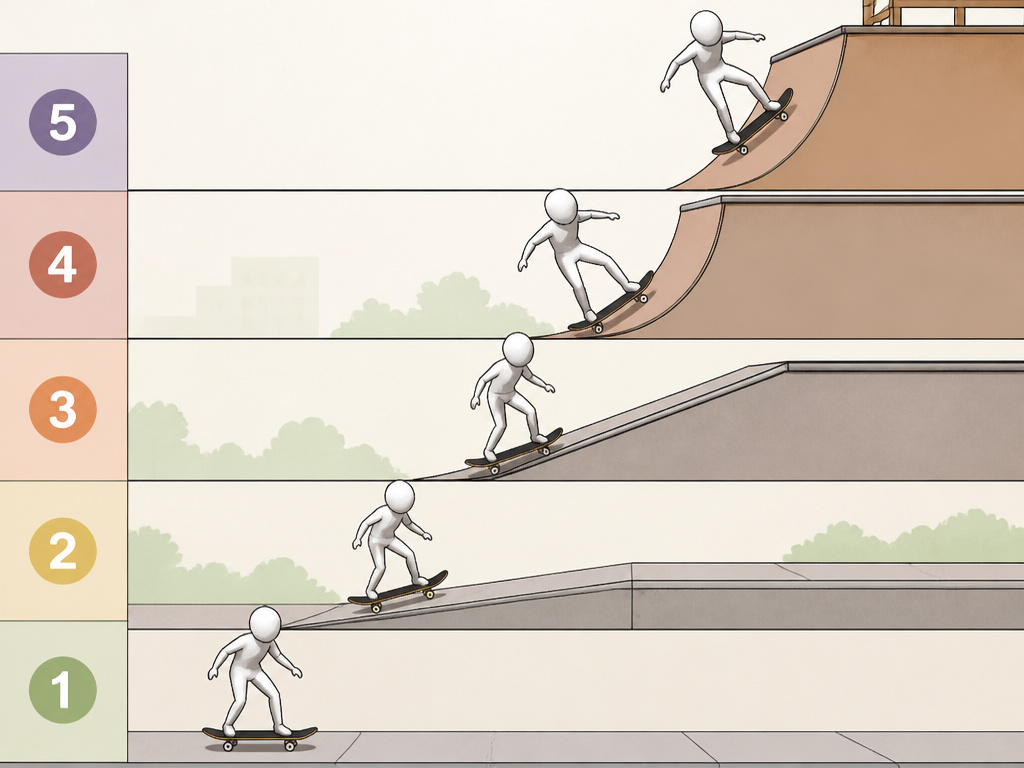
You don’t learn to drop in on a vert ramp. You build up to it. This ladder creates success at every step, which is the best fear-killer there is.
Rung 1: The “Stomp” on Flat. Find a flat parking lot. Place your board on the ground. Practice the exact motion: back foot on tail, front foot over bolts, bend knees, and sharply shift your weight forward, slamming the front wheels down. Listen for the clack. Do this repeatedly. The sound is your feedback.
Rung 2: The Curb Cut. Find a driveway curb with a sloped, rounded edge (a “roll-off curb”). Place your back wheels on the top of the slope, tail on the sidewalk. This mimics the coping. Perform the stomp. You’ll get a tiny bit of roll. This teaches you the timing as the board starts to move.
Rung 3: The Smallest Bank. Use a gentle, paved incline at a skatepark or a parking lot. The angle should be so mellow you could walk down it. This is where you learn to manage the slight speed and complete the roll-out. Practice riding down it normally first to get comfortable.
Rung 4: The Tiny Quarter Pipe. Move to the smallest quarter pipe or mini-ramp you can find, two or three feet tall. This is your first real coping. Spend a session just pumping back and forth, getting a feel for the transition. Then try your drop in.
Rung 5: Graduating Up. Once you can drop in on the small ramp consistently, you’re ready for something steeper. The feeling is identical; only the speed increases. If you’ve mastered the sequence, the size doesn’t matter.
This structured progression systematically builds the skill while keeping the fear at a manageable level. Each step is a small win.
Gear Up: Your Psychological Safety Net
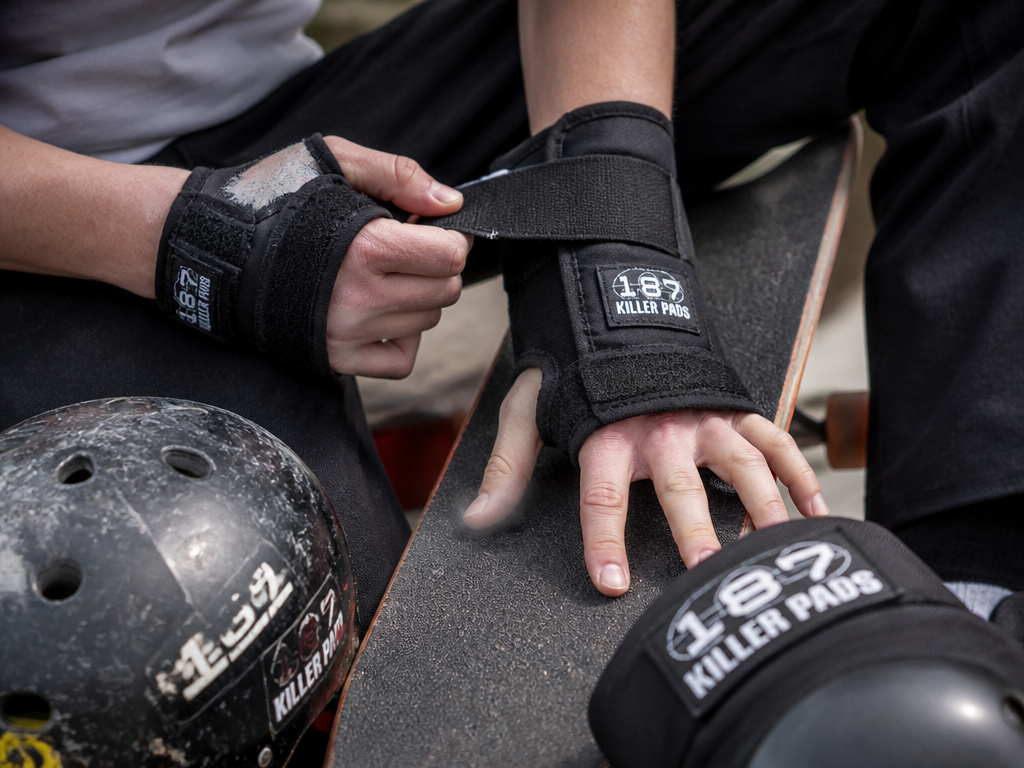
Protective gear is required for overcoming fear. It’s not about being safe; it’s about feeling safe enough to try. A helmet, knee pads, elbow pads, and wrist guards change the cost of failure from a hospital visit to a scuffed pad.
When you’re suited up, falling becomes a learning event, not a trauma. You can take the slam, get up, and analyze what went wrong. This is how you develop the resilience needed for all of skateboarding, not just dropping in. Don’t let anyone tell you pads are uncool. Walking away from a slam because your gear did its job is the coolest feeling there is.
The Moment of Commitment: What “Just Go” Actually Means
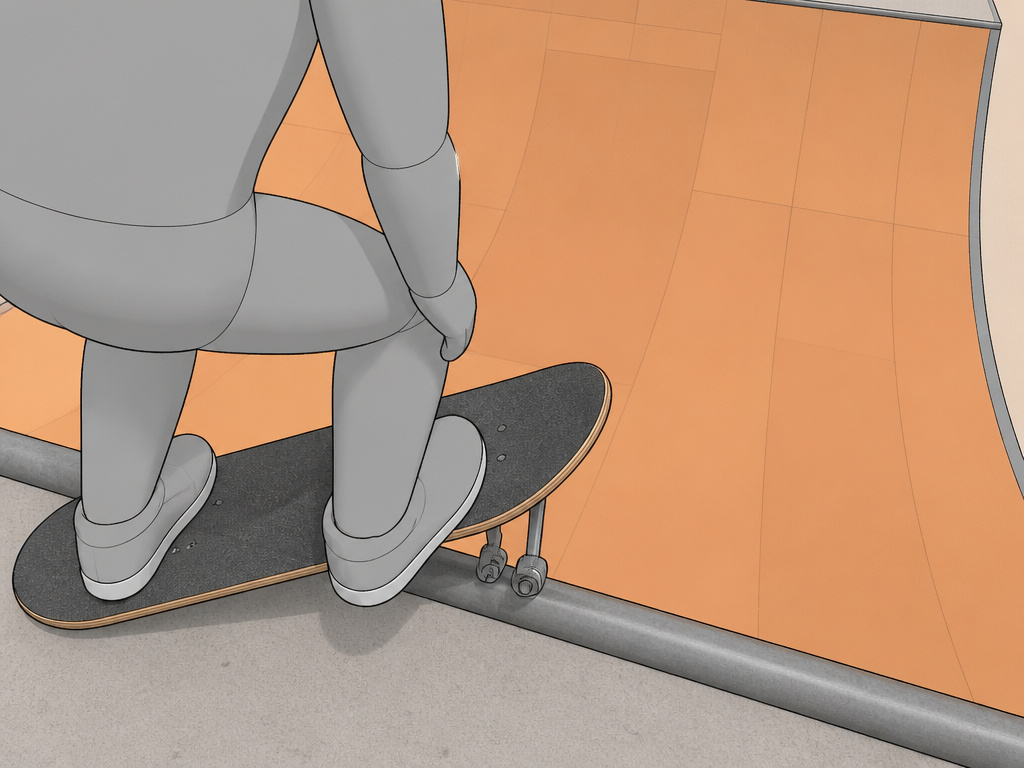
All the practice leads to this. You’re at the coping of your target ramp, geared up, warmed up. You’ve visualized it. Now you have to act.
The “commit” isn’t a leap of faith. It’s the decision to execute the practiced sequence despite the fear. Your brain will scream “NO!” Your job is to acknowledge the scream, then start your countdown and move. The Reddit veterans are right: not committing is more dangerous than a committed attempt that fails. A half-lean guarantees a slam. A full commit might still result in a fall, but it’s a fall you’re now prepared for.
This is the core of commitment in skateboarding. It’s the split-second where practice meets the real thing. If you find you simply cannot move, the ramp is too big for your current skill level. There is no shame in stepping back down and spending another session on the smaller ramp. Forcing it only deepens the fear.
Having the Trick Locked In on Flat First
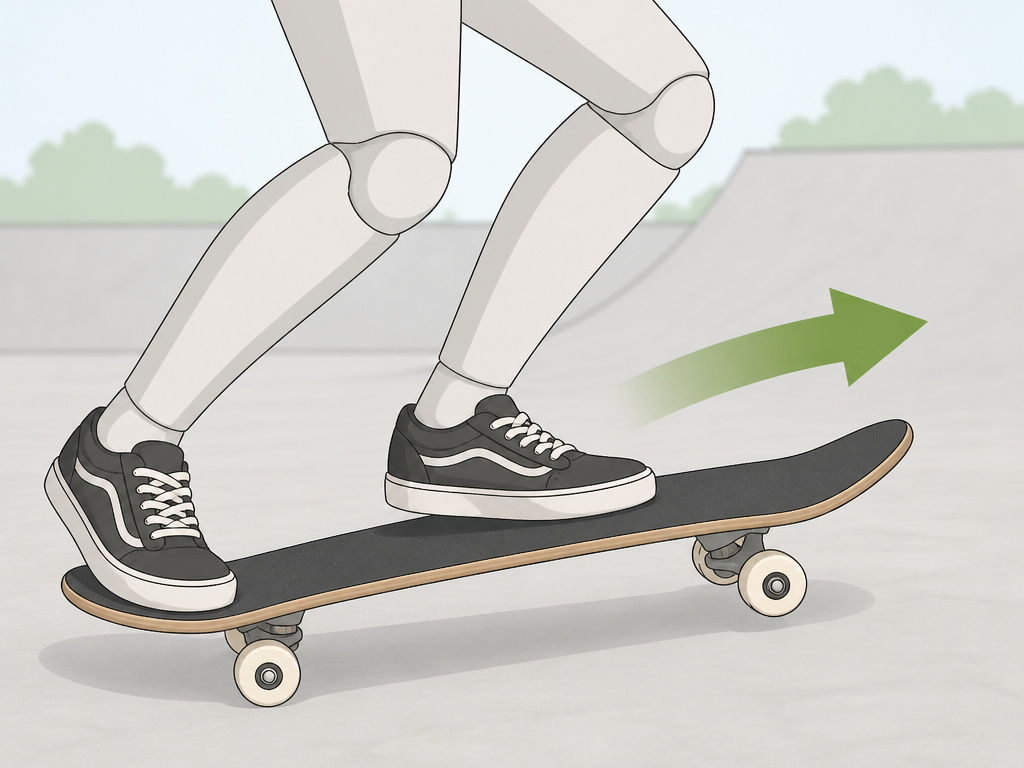
Before you even approach the ramp, you need the motion wired into your muscles on flat ground. Find a flat, smooth surface and practice the exact stance and weight transfer you’ll use for the drop. Your shoulders should be square, your knees bent, and your weight ready to commit forward. You’re not just going through the motions; you’re building the muscle memory so deep that you can do it without thinking. When you move to the ramp, your body already knows the drill. The only new variable is the transition itself, not the fundamental move.
Frequently Asked Questions
How to not be scared of dropping in?
You can’t eliminate the fear, but you can manage it. Break the skill into tiny, non-scary steps practiced on flat ground. Wear full protective gear to reduce the consequence of a fall. Use breathing and countdowns to trigger action before fear can paralyze you. Fear diminishes with each successful repetition.
Is dropping in on a skateboard hard?
The mechanics are simple: stomp forward and roll. The mental barrier is enormous for most beginners. That’s what makes it feel hard. By separating the physical practice from the mental challenge, you make it achievable. On a small ramp, it’s a skill most can learn in a few dedicated sessions.
How to not be scared of falling?
Practice falling on purpose in a safe environment. Learn the tuck-and-roll techniques for forward and backward falls. This turns the unknown into a known drill. Combined with pads, it reshapes falling from a scary accident into a manageable part of learning. You can read more about managing this specific fear of falling.
Can you be afraid of falling but not heights?
Absolutely. This is common in skateboarding. The fear is of impact, pain, and injury, not of elevation. That’s why practicing safe falling techniques and wearing gear is so effective, it directly addresses the source of the fear, not the height.
Before You Go
One rule most guides skip: if you haven’t successfully dropped in on your current ramp after three serious attempts, stop. Go back to the previous step in your progression ladder and get five clean reps there. Success breeds confidence; repeated failure at too high a level breeds frustration and deeper fear.
Your next session should have one goal: perfect the stomp on flat ground repeatedly, then find the gentlest bank or curb cut and link that stomp into a roll-out. Don’t even look at the real ramp. Mastery is a ladder, and the first rung is always on flat ground.
