
Skateboard Deck Size Chart: How to Read It
This post contains affiliate links. As an Amazon Associate, we earn from qualifying purchases.
Skateboard deck width is the single most important measurement for fit and feel. It typically ranges from about 7.5 to 9 inches for standard popsicle decks, with your shoe size and preferred skating style being the two biggest guides. Width determines stability, flip speed, and how comfortable your feet feel on the board.
The chart is a starting point, not a final rule. I rode a deck that was too wide for my style because I followed a generic recommendation, and it felt sluggish under my feet for months. The real answer lives in how the board feels when you stand on it and push.
What follows is how to read any size chart, a breakdown of why width matters more than length, and the one field test that tells you if a deck fits before you buy it.
Key Takeaways
- Start with a deck between 7.75″ and 8.25″ if you’re a beginner; this width gives you a balance for trying both street and park skating.
- Match your truck axle width to your deck width; a mismatch of more than 1/4 inch makes the board feel unbalanced for grinds and can affect turning.
- A deck is typically made with seven layers of maple on average; more plies don’t mean more quality, they mean a stiffer, heavier board that’s harder to break in.
- Check your deck before every session for cracks around the truck bolts; a soft, dead pop when you ollie means it’s time to retire the board.
- For most adults, an 8.0″ to 8.25″ deck paired with 54-56mm wheels is the default setup that works on street and in the park.
How to Read a Skateboard Deck Size Chart
Every shop and brand publishes a slightly different skateboard deck size chart. They all try to map three things: your shoe size, your height, and your skating style to a deck width. The problem is people have different proportions and preferences, so these charts often disagree.
Take shoe size. If you wear a US men’s size 9, sources like evo and Element might point you to an 8.0″+ deck, while CCS recommends 8.25″ to 8.5″ on their skateboard deck size chart. That quarter-inch difference is real under your feet. The charts from Tactics and CCS show this conflict clearly.
| Shoe Size (US Men’s) | Tactics Recommendation | CCS Recommendation |
|---|---|---|
| 6.5 – 9 | 7.5″ – 8.0″ | 7.5″ – 8.0″ |
| 9.5 or larger | 8.0″ – 8.5″ | 8.25″ – 8.5″ |
Where this goes sideways: Choosing a deck based solely on the chart without standing on it. A deck can be the “right” size on paper but feel completely wrong when you step on it at the shop.
The charts work best as a filter. Use them to narrow the wall of decks down to two or three widths in your range. Then, ask to stand on them. Your feet will tell you if the width feels cramped, roomy, or just right. This essential step is what most online buyers miss, and it’s why I always point beginners to a local shop for their first board.
Deck Width by Shoe Size: The Practical Guide
Your shoe size gives you a ballpark. A size 13 foot on a 7.75″ deck means your toes and heels hang off the sides significantly. That’s not inherently wrong, some skaters prefer that feel for flip tricks, but it’s a specific choice, not a comfortable default.
Here’s the synthesis from the major guides. According to CCS, if your shoe size is smaller than a US men’s 5, you’re in mini-deck territory (7.38″ or less). For everyone else, this table blends the common advice.
| Your Shoe Size (US Men’s) | Suggested Deck Width | Why This Range Works |
|---|---|---|
| Under 5 | 7.38″ or less (Mini) | Lighter, shorter wheelbase for smaller riders. |
| 5.0 – 7.0 | 7.5″ – 8.0″ | Balances control for learning pushes and basic ollies. |
| 7.5 – 9.0 | 7.75″ – 8.25″ | The most common range, suitable for most street skating. |
| 9.5+ | 8.0″ – 8.5″+ | Provides a stable platform for larger feet and transition skating. |
I wear a size 10. My first real deck was an 8.0″. It felt fine. Then I stood on an 8.25″ at a demo day. The extra real estate under my front foot made manuals feel instantly more stable. That quarter-inch changed my game. It’s a small measurement with a big impact on confidence.
Matching your deck to your shoe size is about giving your feet a platform they can use effectively, not about following a rule. A little overhang is normal; swimming in space is not.
Remember, these are starting points. The deck width for shoe size guide on our site dives deeper into the mechanics, but the final judge is your own balance point.
How Deck Width Affects Performance
This is the why-layer. Width isn’t just a number; it changes the board’s physics.
A narrower deck, say 7.75″, has less surface area and often less weight. Your flicking foot has a shorter distance to travel to catch the edge of the board during a kickflip. The board rotates faster in the air. This is why skaters focused on technical street tricks, flatground flips, ledge grinds, quick manuals, often gravitate to widths between 7.75″ and 8.25″. The Element brand guide specifically calls out a deck width between 7.75 and 8.5 inches for street skateboarding.
A wider deck, like an 8.5″, has more wood. It’s heavier and spins slower. What you gain is stability. When you’re carving a bowl or dropping in on a vert ramp, that extra width gives you a more secure feeling platform at speed. Your weight is distributed over a larger area, which can make landings from big airs feel less sketchy. Tactics notes that skaters on large transitions prefer 8.25″ to 9.0″ for this reason.
The feel is tangible. A deck that’s too wide for your style will feel like driving a bus, steady but unresponsive. One that’s too narrow can feel like balancing on a tightrope when you just want to cruise. Your skating style should pull you toward one end of the spectrum. If you’re all about tech, lean narrower. If you live for park flow, lean wider. For a blend of both, stay in the middle.
Skateboard Deck Length: Why It Matters Less
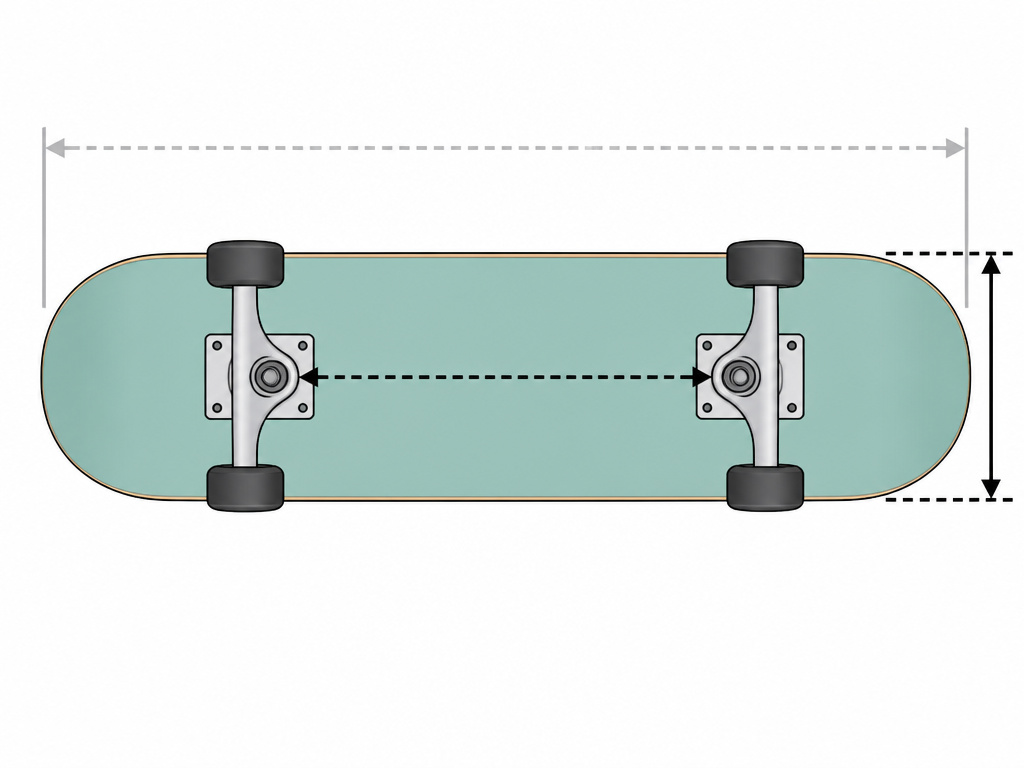
You’ll see deck length listed on specs, usually between 28 and 33 inches. Beginners often fixate on it, thinking a longer board is for taller riders. In practice, it matters far less than width.
Length influences the wheelbase (the distance between the inner truck mounting holes). A longer wheelbase provides more stability at high speed and a smoother ride over rough ground. A shorter wheelbase makes the board turn quicker and feel more nimble.
Most street skateboards have a deck length ranging from about 28 inches to 33 inches. Unless you’re specifically looking for a cruiser or an old-school shape, the length that comes with your chosen width is probably just fine. Focus your decision energy on width first. Our skateboard deck length guide has the details if you’re curious, but don’t let it complicate your first choice.
Matching Trucks to Your Deck Width
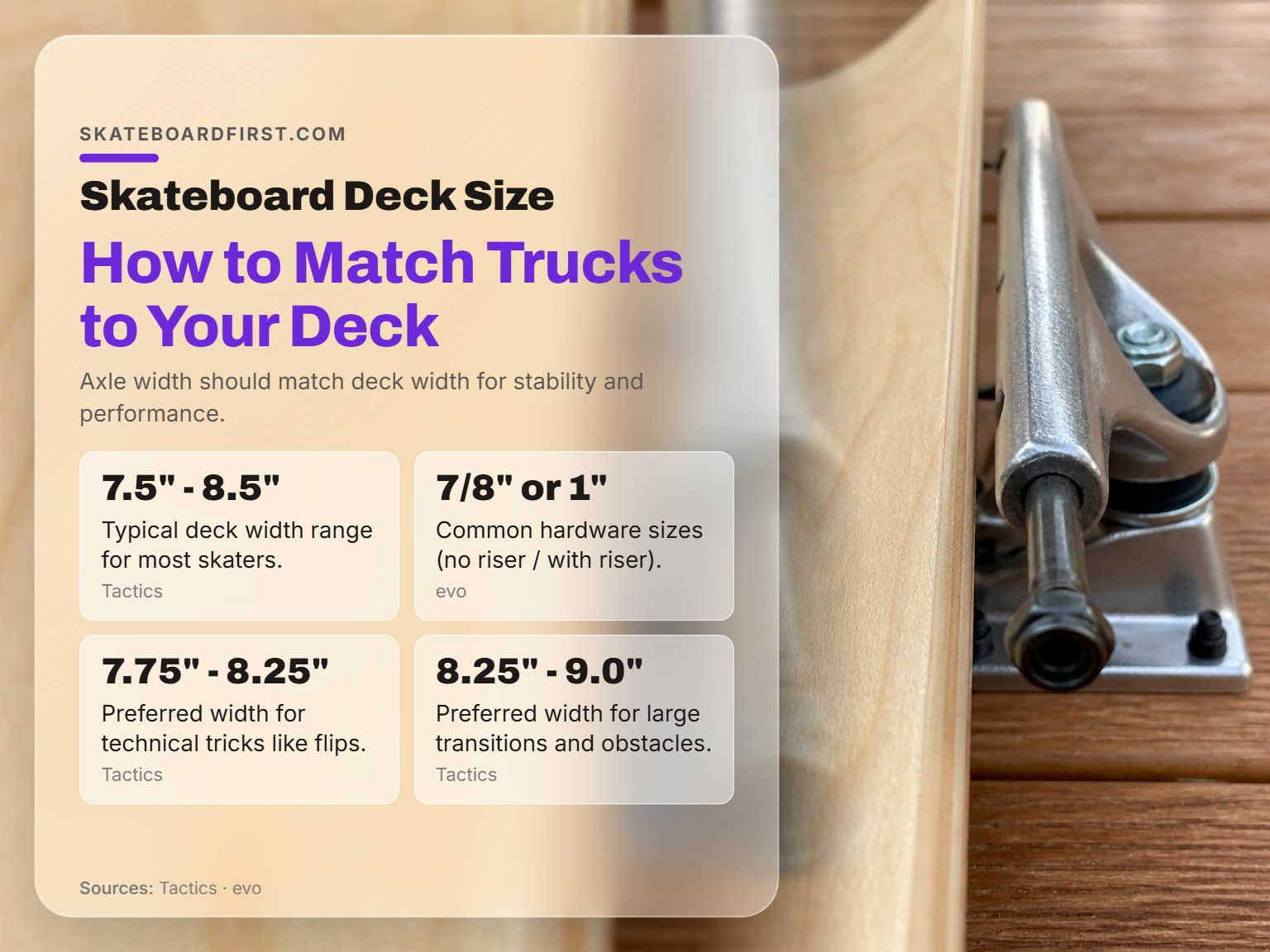
Buying a deck is only half the setup. Your trucks must match. The rule is simple: the axle width of the truck should be roughly the same as the width of your deck. The evo guide states it plainly: ideal truck size is the width from one edge of your board to the other.
Most truck companies size their products by the deck width they’re designed to fit. Independent Trucks, for example, labels their 149 model as fitting 8.25″ to 8.5″ decks. Going outside this range causes problems.
- Trucks too narrow: The wheels sit in from the deck’s edge. The board feels tippy for grinds, and you lose some stability.
- Trucks too wide: The wheels stick out past the deck. You risk wheelbite (the wheel touching the deck during turns) and catch your wheels on grinds.
According to Skate Labs, a 7/8″ hardware size fits most setups without riser pads. Use 1″ hardware if you add even a thin riser.
Get this match right. A perfect deck with mismatched trucks never feels right. It’s the most common mechanical mistake I see in beginner completes, and it’s solved by checking a truck size chart before you buy.
Deck Size for Street vs. Transition Skating
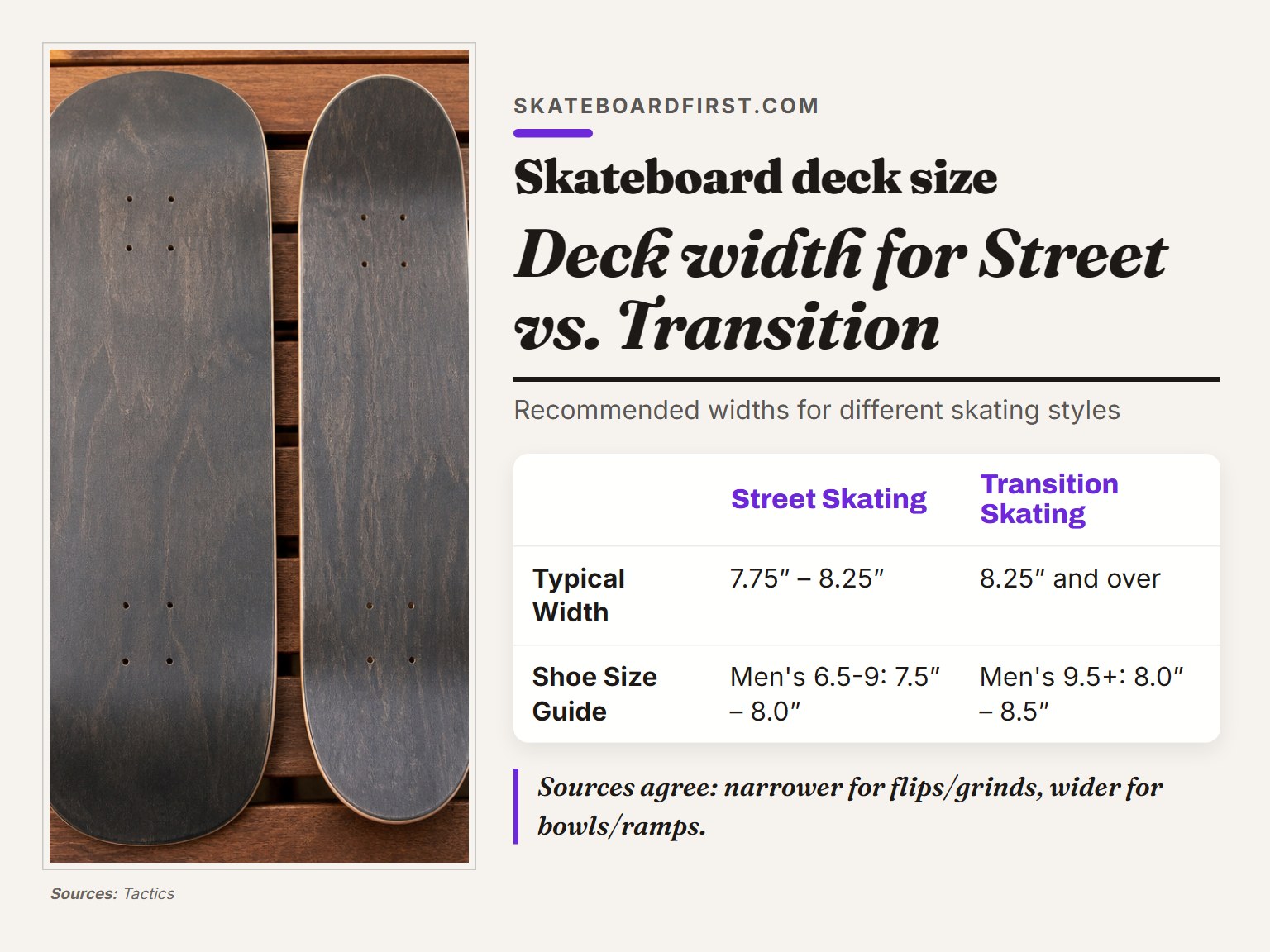
Your terrain choice dictates your gear. The recommendations here aren’t vague; they’re tied to specific performance needs.
For Street Skating:
- Width: 7.75″ to 8.25″. This is the consensus from Tactics, Element, and forum chatter. The narrower end (7.75″-8.0″) is for flick-heavy trick skaters. The wider end (8.125″-8.25″) offers more stability for gaps and stairs while still being flip-able.
- Why: Less weight for faster spins, a narrower profile for locking into grinds on ledges and rails, and a quicker flick for flip tricks.
- Real Example: A skater focusing on kickflips, 50-50 grinds, and flatground would likely pick a Real or Baker deck in 8.06″ or 8.125“.
For Transition/Park Skating:
- Width: 8.25″ and over. Element’s guide directly states wider decks are the go-to for pool, ramp, or transition skating.
- Why: Stability at speed is king. A wider platform gives you more control when carving a bowl, landing from airs, and pumping around the park. The extra weight is a benefit here, not a hindrance.
- Real Example: A skater who lives at the local bowl would run an 8.5″ DGK deck or a shaped 8.75″ cruiser for maximum foot real estate.
You can absolutely skate an 8.5″ in the streets or an 8.0″ in the park. Many do. But if you have a dominant style, leaning into the width that supports it will make learning easier. Your skateboard size for street skating will naturally be on the narrower side of your personal range.
How to Test Deck Size Before You Buy
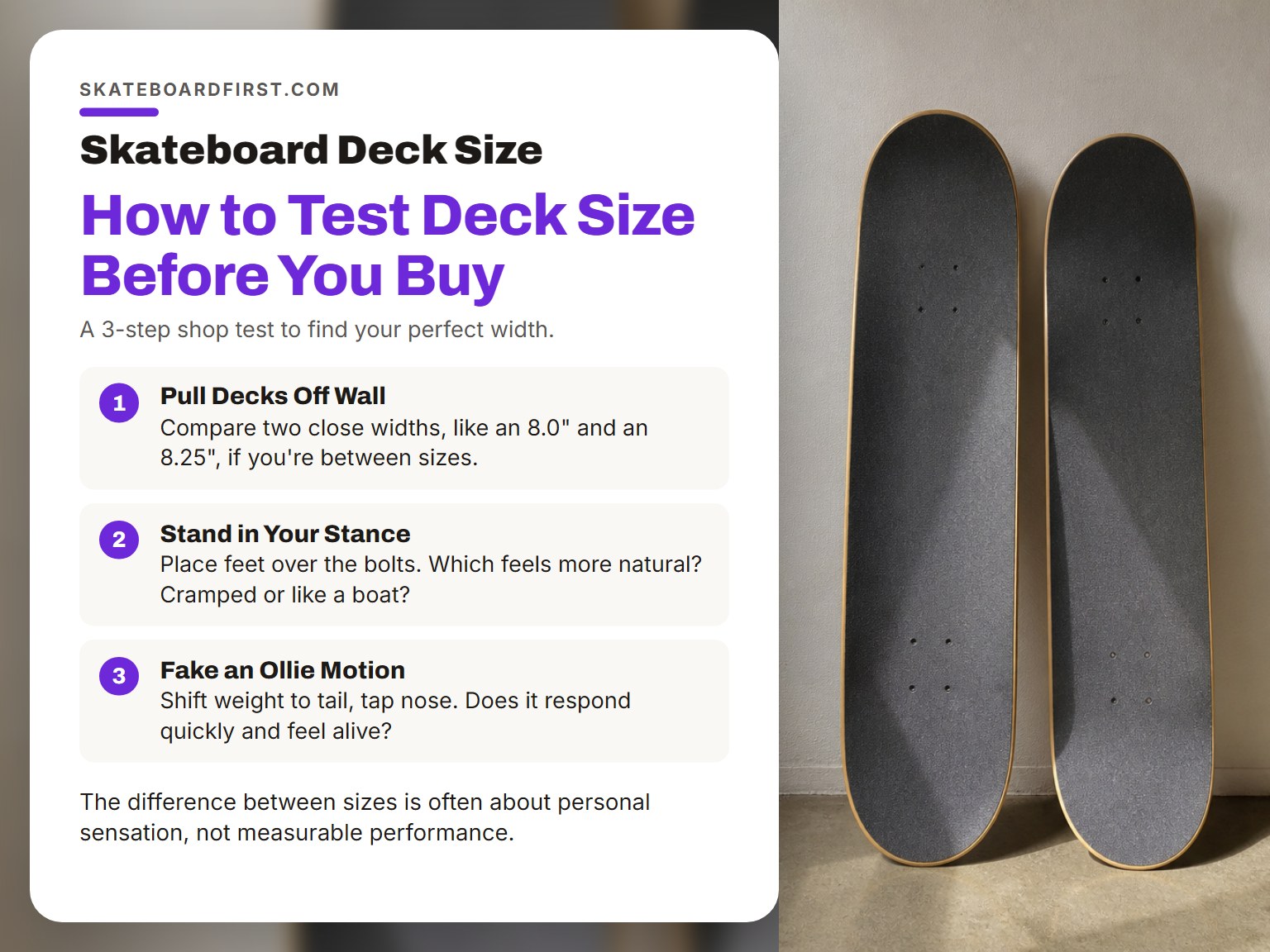
Charts and advice get you close. Your body gives you the final answer. Here’s a simple, three-step test you can do in any shop.
- Pull the decks you’re considering off the wall. Get an 8.0″ and an 8.25″. If you’re between sizes, this is the most important comparison.
- Stand on them in your normal stance. Don’t just look. Place your feet over the bolts, as if you’re riding. Which one feels more natural? Does one feel cramped? Does the other feel like a boat?
- Do a fake ollie motion. Shift your weight to the tail and tap the nose down. Does the board respond quickly? Does it feel like it has pop? The deck should feel alive, not dead or mushy.
This test takes two minutes and eliminates weeks of doubt. It also reveals a key truth: the difference between an 8.0″ and an 8.25″ is often more about personal sensation than measurable performance. I know skaters with the same shoe size who swear by opposite ends of this range. Your preference is the final metric.
When to Replace Your Skateboard Deck
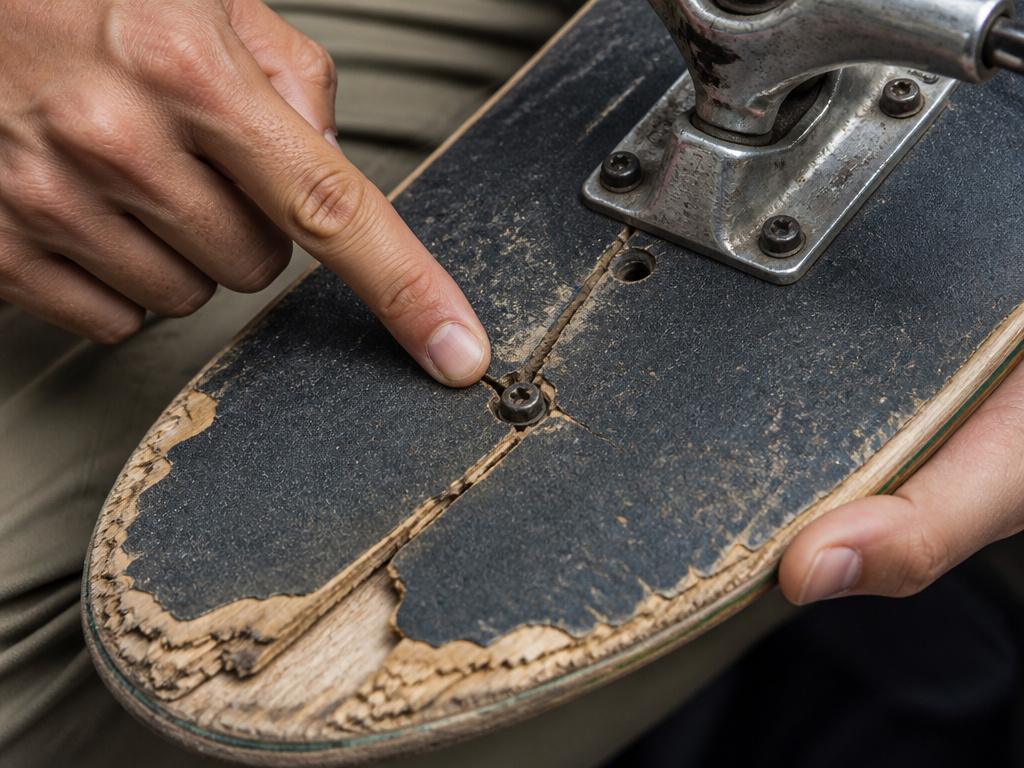
A deck isn’t forever. It loses its pop and becomes dangerous as it wears. The Skate Labs guide lists the clear signs: cracks, a soft or dead feel when you pop, deep chips, or a tail worn thin.
The “dead pop” is the big one. You’ll know it. The board no longer snaps off the ground with energy; it feels soggy and unresponsive. For a beginner, this might take six months to a year. For someone skating daily, it could be a matter of weeks.
Before you start: Always check your deck for new cracks, especially around the truck mounts, before a session. A cracked deck can snap under pressure, and that’s a fast ticket to the ground.
Regular maintenance extends life. A quick wipe-down of the grip tape and a check of the hardware every few weeks keeps things rolling. But when the pop is gone, it’s gone. Retire the deck and use the experience to inform your next choosing deck width decision. Maybe you go a little wider for more stability, or a touch narrower for faster flips.
Deck size recommendations for beginners
Tactics recommends starting with a deck width between 7.5 and 8.0 inches if you wear a men’s shoe size between 6.5 and 9. This provides a stable platform for learning to push, turn, and balance without being too unwieldy. Guides disagree on the exact width for this size: Tactics and Tactics Japan suggest 8.0″ to 8.5″ for shoe size 9.5+, while CCS recommends 8.25″ to 8.5″ for size 9.0-10.5. The key is to avoid extremes; a mid-range width gives you room to figure out what feels right as you develop your initial skills.
Deck size based on rider height/age
Most size charts use shoe size as the primary guide, but height is also a factor. For younger or shorter riders, a narrower deck is often recommended. CCS states that if a skater’s shoe size is smaller than a US Men’s Size 5, a mini-skateboard (7.38” or less) is a great option. For growing riders, matching deck width to shoe size is a practical approach. A general rule is that taller riders with larger feet will find a wider deck, typically 8.0 inches and up, more comfortable and stable. Since body proportions vary, it’s best to consider both your height and your shoe size together when looking at a chart.
Frequently Asked Questions
How do I know what size skateboard deck to get?
Start with your shoe size using a chart to find a range (e.g., 8.0″-8.25″). Then, consider your primary skating style, street favors narrower decks within that range, while transition skating favors wider ones. If possible, visit a shop to stand on the decks in your range. The one that feels most natural under your feet is the right size.
Should I get an 8.25 or 8.5 deck?
Choose 8.25″ if your focus is on technical street tricks like flip tricks and ledge grinds, or if you have a smaller shoe size (under US men’s 9). Choose 8.5″ if you skate transition (bowls, ramps) frequently, prefer stability over flick speed, or have larger feet (US men’s 9.5+). The 0.25-inch difference is noticeable in weight and flip feel.
What is a standard skateboard deck size?
The most common deck widths for adult street skating are between 8.0″ and 8.25″. This range is a safe middle ground that works for a variety of shoe sizes and blends stability with trick capability. Decks are typically around 31 to 32 inches long and are constructed with seven plies of maple.
Does deck length matter for beginners?
Not much. Deck length (and the resulting wheelbase) has a minor effect on stability and turning sharpness that most beginners won’t notice. As a novice, you should focus almost entirely on choosing the correct deck width for your shoe size and intended style. Length is a secondary concern.
How do I match trucks to my deck?
Select trucks where the axle width (often listed as the “fitting range,” like 8.0″-8.25″) matches your deck’s width. The wheels should end up flush with or just inside the edge of the deck. Using a truck size chart from a brand like Independent or Thunder ensures the axle width matches your deck’s width.
Can I use a wide deck for street skating?
Yes, but there’s a trade-off. Decks 8.5″ and wider offer more stability and landing space, which is great for cruising and big stairs. However, they are heavier and slower to flip, making technical flip tricks more physically demanding. Many street skaters find widths over 8.5″ to be too cumbersome for a daily street setup.
The Bottom Line
Forget finding the one perfect size. Focus on finding your range. For most skateboard size for adults starting out, that range is 8.0″ to 8.25″. It’s the neutral zone where you can learn what you like without a deck that fights you.
Here’s your first step: go look at your current setup. What’s the width written on the deck? Now, think about the last few sessions. Did the board feel too twitchy, too sluggish, or just right? That feeling is your guide for the next deck. If you’ve never measured, learn how to measure a deck properly, it’s a thirty-second job with a tape measure.
The goal isn’t to decode every chart. It’s to get a deck under your feet that makes you want to skate more. Everything else, the perfect flip, the solid grind, comes from that.
